Porcelain vs Natural Stone: Which Patio Material Is Right for Your Garden?
If you’re planning a new patio, the material you choose will shape how your garden looks and feels for years to come. It’s one of those decisions that’s worth getting right first time.
Two materials come up more than any others when we’re talking through options with clients: porcelain and natural stone. Both look brilliant when they’re well laid. Both will last. But they suit different gardens and different people, and understanding the difference can save you a lot of second-guessing later on.
What is porcelain paving?
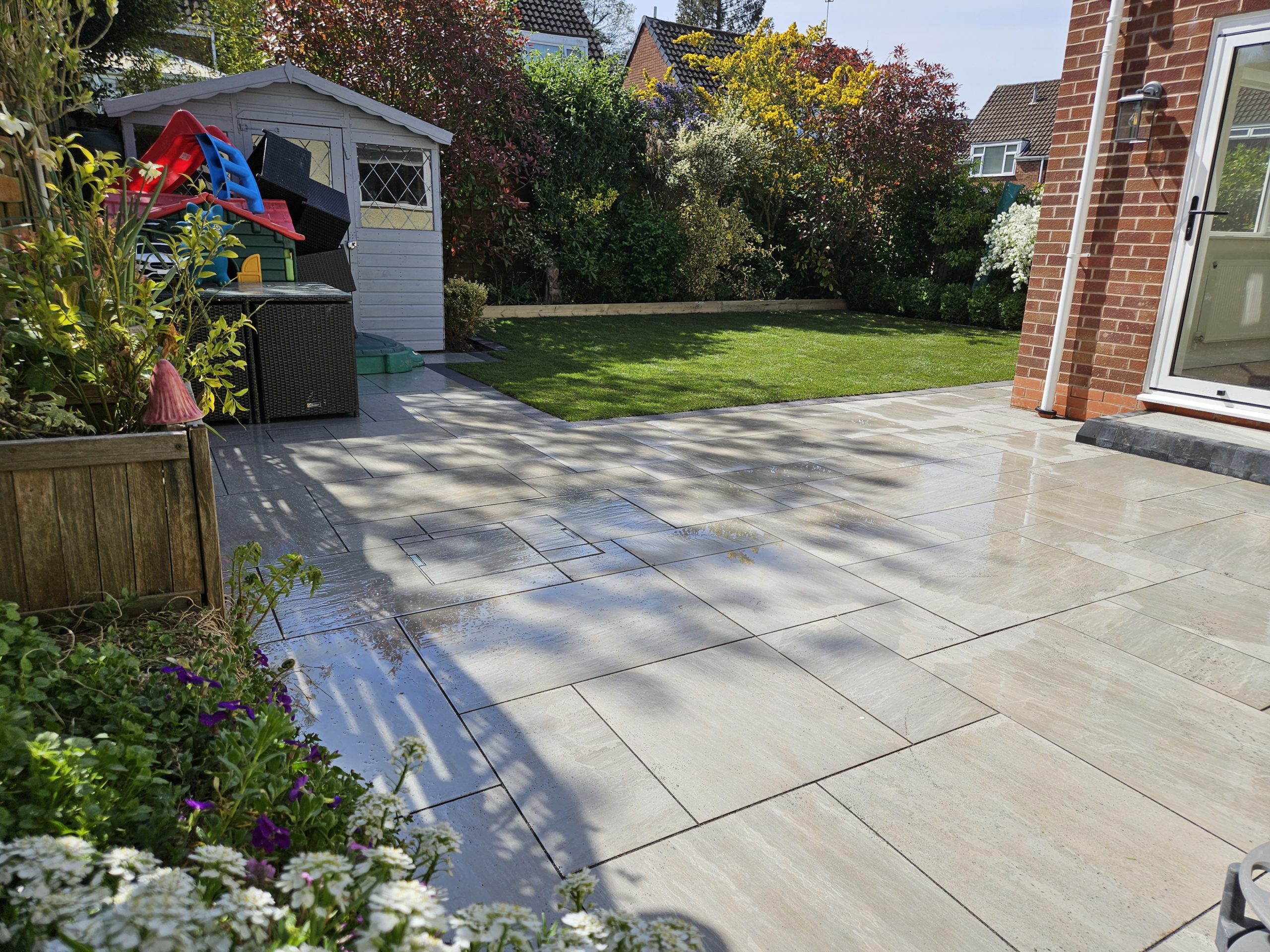
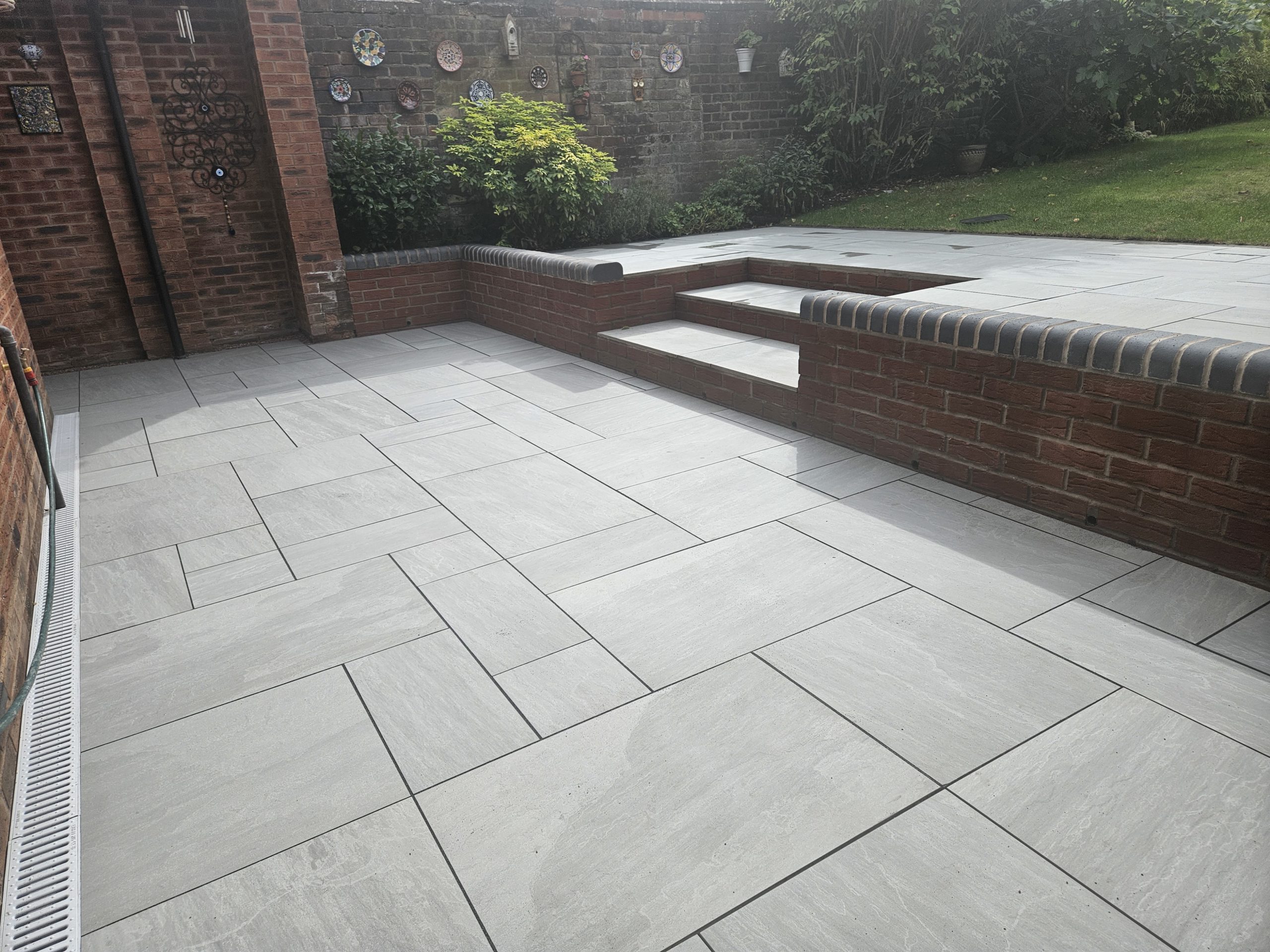
Porcelain paving is manufactured from refined clay, fired at very high temperatures. The result is a dense, hard-wearing tile with a consistent finish throughout. Most porcelain slabs are designed to replicate the look of natural stone, wood, or concrete, and modern manufacturing has got very good at it.
What is natural stone paving?
Natural stone covers a range of materials: sandstone, limestone, slate, and granite are the most common choices for garden patios in the UK. Each has its own character, its own colour variation, and its own quirks. No two slabs are exactly alike, which is either the appeal or the complication depending on how you look at it.
Appearance
This is where the two materials divide opinion most sharply.
Natural stone has a depth and variation that porcelain can’t quite replicate. Sandstone in particular has a warmth to it that
suits traditional and cottage-style gardens well. The natural colour variation means the patio becomes part of the garden
rather than sitting on top of it.
Porcelain is cleaner and more consistent. If you’re going for a contemporary look with strong lines and minimal clutter, that
consistency works in your favour. It photographs well and tends to look very sharp against modern architecture or sleek
garden design.
Neither is objectively better. It really comes down to the style of your home and garden, and what you want the space to feel
like.
Durability and maintenance
Porcelain is extremely hard and frost resistant. Because it’s non-porous, it doesn’t absorb moisture, which means it’s less
likely to crack in cold weather and much easier to clean. Moss and algae don’t get the same grip they do on natural stone. A
brush down and an occasional jet wash is usually all it needs.
Natural stone requires a bit more attention. It can stain over time and, in shadier spots, may become slippery if moss and
algae are allowed to build up. Keeping it clean with regular brushing and an occasional wash will go a long way. That said, a
well-maintained natural stone patio will age beautifully, developing a patina that many people find more appealing than
when it was brand new.
If low maintenance is a priority, porcelain has the edge. If you don’t mind a bit of upkeep and want a surface that improves
with age, natural stone is hard to beat.
Installation
Both materials need a properly prepared sub-base to perform well. Cut corners on the groundwork and it doesn’t matter
which surface you choose; you’ll end up with an uneven, unstable patio within a few years.
Regardless of which material you go for, both should be laid on a full bed of mortar. This is the manufacturer’s standard for any
quality paving slab, and for good reason: full-bed installation ensures even load distribution, prevents hollow spots forming
beneath the surface, and gives the patio the structural integrity to last. Anything less than a full bed isn’t the right way to do it.
Porcelain is heavier and harder to cut than natural stone, which means it takes skill and the right equipment to lay well.
Natural stone is more forgiving to work with but still requires care. Accurate cutting, consistent joint widths, and good pointing
make the difference between a patio that looks handmade in the best sense and one that just looks uneven.
Whichever material you choose, the installation matters as much as the product itself.
Cost
Natural stone is generally the more affordable option when it comes to materials, though prices vary considerably depending
on the type of stone and where it’s sourced. Indian sandstone sits at the more accessible end; granite and high-quality
limestone can be significantly more expensive.
Porcelain tends to cost more per square metre for the material itself, and because it requires more careful installation, labour
costs can also be slightly higher. That said, the lower maintenance requirements over time can offset that initial difference.
It’s worth thinking about the full picture: material cost, installation cost, and what you’re likely to spend maintaining it over
the next ten to fifteen years.
Which is right for your garden?
A few questions worth asking yourself:
How much time do you want to spend maintaining it? If the honest answer is very little, porcelain is probably your material.
What does your house look like? A Victorian terrace or a period property often suits the warmth and variation of natural stone.
A newer build with clean render and large windows tends to work better with the contemporary finish of porcelain.
What’s your budget? Be realistic about both the installation and the ongoing upkeep.
Do you want it to look the same in fifteen years as it does on day one, or are you happy for it to develop character over time?
There’s no universal right answer, but there is usually a better fit for any given garden. If you’re not sure which way to go, it’s
worth talking it through with someone who’s laid a lot of both.
We’re happy to advise. Get in touch through the website and we can talk through what would work best for your space.
www.mdkgardenservices.co.uk/contact
Get in Touch