The July Pest Alert: Defending West Midlands Hedges from the Box Caterpillar
Few features offer the same structural elegance to a garden as crisp, formal topiary. Whether shaped into neat spherical balls, low perimeter hedging, or complex geometric designs, the common box shrub, known botanically as Buxus sempervirens, has long been a reliable staple of traditional English garden design.
However, a devastating new threat is currently sweeping through Stourbridge, Dudley, and the wider West Midlands, leaving a trail of ruined gardens in its wake. The dreaded box caterpillar has arrived.
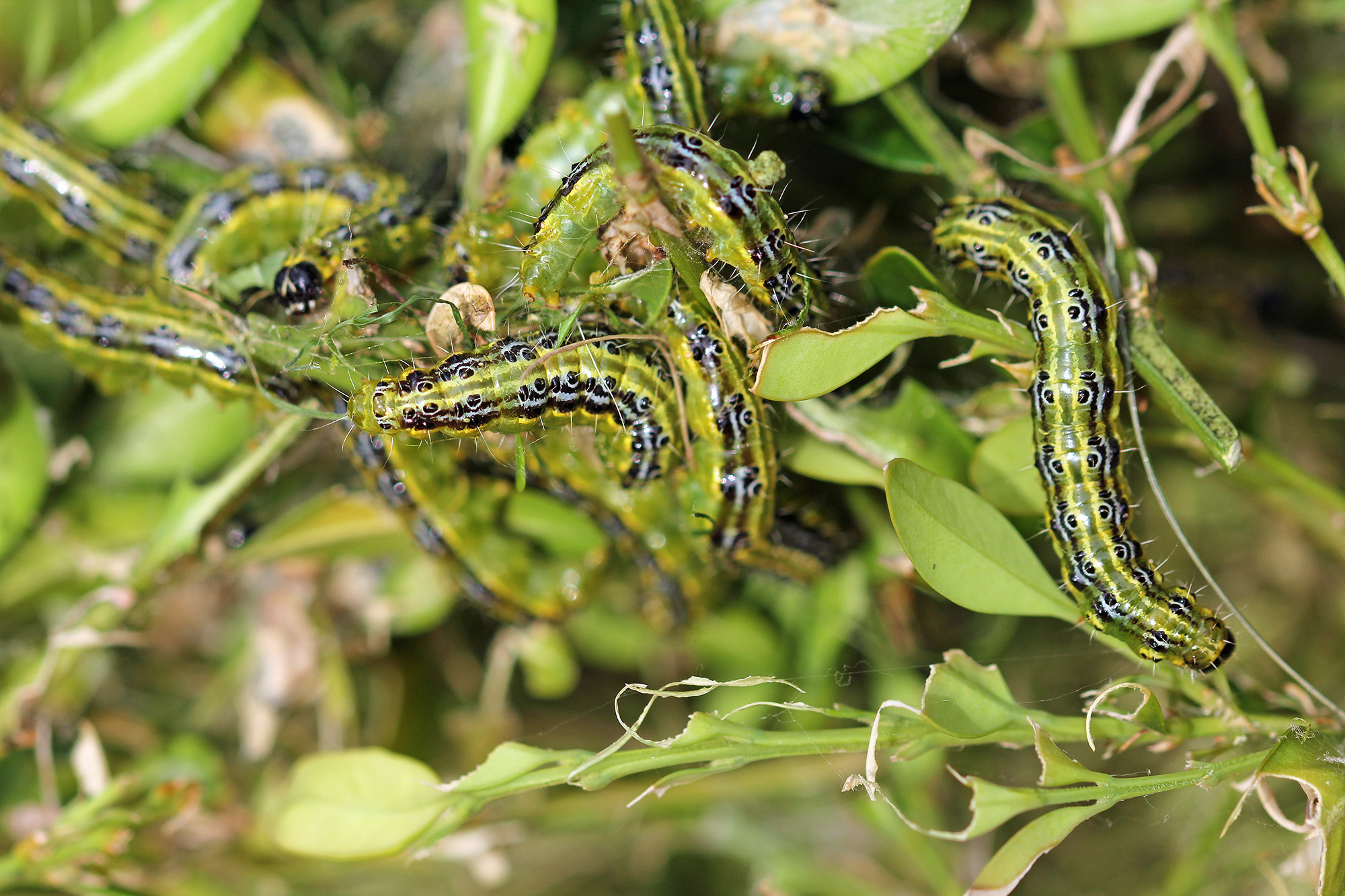
Alongside the long-standing challenges of fungal box blight, local gardens are experiencing a massive invasion of this highly destructive pest. The box caterpillar is capable of stripping healthy, mature topiary down to bare, dead wood in a shockingly short window of time. Over the last three weeks alone, our teams have had to completely remove and dispose of roughly 15 to 20 ruined shrubs across the Stourbridge area, many of which had been nurtured with love for 15 to 17 years.
If you have box features in your garden, immediate vigilance this July is absolutely crucial to safeguard your plants. Understanding what to look for and how to deploy a swift box caterpillar treatment in Stourbridge can mean the difference between saving your decades-old topiary or watching it disappear overnight.
Extreme Speed: Why You Must Act Immediately
What makes this invasion exceptionally heartbreaking for homeowners is the sheer velocity of the destruction. In the early stages, the box caterpillar feeds quietly inside the thick, green foliage. By the time the damage becomes visible on the outer shell of the hedge, the population is usually mature and eating at an aggressive rate.
The devastation happens incredibly fast. While larger hedges are decimated in a matter of weeks, smaller box balls, such as those measuring around one to two feet wide, can be completely stripped and destroyed in just a single week. If you do not inspect your plants and act the moment you see them, there is simply no time for the plant to react or recover.
Eradication Strategies: Chemical vs. Biological Controls
If you discover an active infestation of the box caterpillar inside your hedging, you must treat the plants immediately. There are two main solutions to combat this infestation and halt the lifecycle of the pest:
1. Targeted Chemical Pesticides When dealing with a severe, fast-moving invasion where structural survival hangs in the balance, a proper chemical pesticide application is a highly reliable option. Spraying the foliage thoroughly with a proper pesticide acts quickly to kill the feeding insects on contact, saving the remaining green leaves from further destruction.
2. Biological Control via Nematodes For gardeners looking for an alternative approach, biological treatments offer brilliant results. This method utilises nematodes, which are beneficial microscopic microorganisms that are mixed with water and applied directly to the shrub. These little organisms infiltrate the bodies of the pests and eat them safely from the inside out, clearing the infestation effectively.
Safeguarding Your Garden’s Future
The frontline battle against this invasive species requires constant monitoring throughout the warm summer months. Walk your garden today, part the branches, and look closely into the centre of your box topiary.
Whether you need urgent assistance deploying a professional-grade box caterpillar treatment in Stourbridge, technical hedge maintenance, or advice on transitioning to insect-resistant alternative planting schemes, our local team is here to help. Contact MDK Garden Services today to protect the structure, health, and beauty of your landscape.